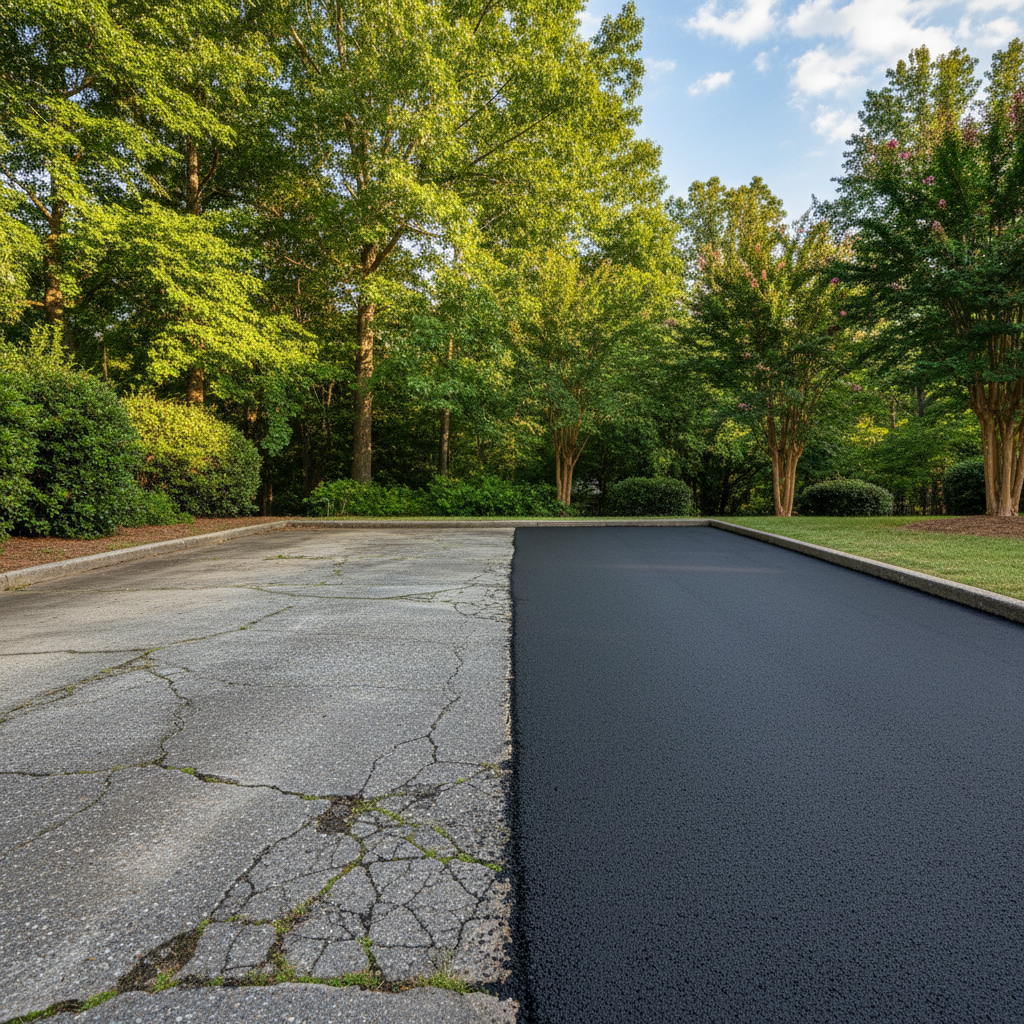
Got a parking lot, a long private drive, or some other big asphalt surface on your Decatur property that's definitely seen better days? Cracks are showing up, potholes are popping out, and honestly, it just doesn't look sharp anymore. So now you're probably wondering: should I just patch it up, or go for something more substantial? When it comes to commercial-grade asphalt, people usually consider two main options: an asphalt overlay or a full-depth replacement. Let's dig into what each one means for your wallet, your property, and how long it'll actually last.
Asphalt Overlay: The Resurfacing Option
An asphalt overlay is basically just putting a new layer of asphalt right on top of your existing pavement — assuming it's still structurally sound, of course. Think of it like a fresh coat of paint, but for your driveway. We'll clean the surface, fix any big cracks or potholes first, and then lay down a new layer, usually 1.5 to 2 inches thick, of fresh asphalt. It's a popular choice, and for good reason.
Cost
This is where overlays really shine for a lot of folks. Since we aren't tearing out the old stuff, it's a good deal less expensive than a full replacement. You save on demolition costs, hauling away debris, and often some of the base material prep. For a business or a large residential property right here in Decatur, that can easily mean saving thousands of dollars.
Durability & Lifespan
An overlay can give you another 8 to 15 years of good service, sometimes even more, depending on how much traffic it sees and how well the original base was holding up. It's not as tough as brand-new, full-depth pavement, but it's a solid refresh. The trick here is the condition of the existing asphalt underneath. If it's got widespread structural issues — like alligator cracking all over the place or major dips — an overlay won't fix those deep problems. It'll just cover them up for a little while, and those issues will eventually show right through the new surface.
Maintenance
Just like any asphalt, you'll want to sealcoat an overlay every few years. That protects it from the sun and rain, you know? Catching small cracks early and filling them will also help it last longer. It's pretty standard asphalt maintenance, nothing too wild.
Appearance
It'll look fantastic right after we're done. Smooth, dark, and new. You'll even get that fresh asphalt smell for a bit. It's a great way to boost curb appeal without totally emptying your bank account.
Full-Depth Asphalt Replacement: Starting Fresh
A full-depth replacement is exactly what it sounds like: we rip out all the old asphalt, dig out the base material if we need to, and then rebuild the entire pavement structure from the ground up. This means a new aggregate base, a new binder course, and a new surface course. It's a much, much bigger job.
Cost
No two ways about it, this is the more expensive option. You're paying for demolition, disposal, new base materials, and a lot more asphalt. But you're also getting a brand-new pavement system that's designed to last.
Durability & Lifespan
This is the gold standard for how long something lasts. A properly installed full-depth replacement can easily go 20 to 30 years, sometimes even longer, especially if you keep up with maintenance. You're getting pavement that's built to handle heavy traffic and the typical Georgia weather patterns — those hot, humid summers and occasional heavy downpours that can really stress pavement, right?
Maintenance
While the initial cost is higher, the long-term maintenance can sometimes be less intensive in the early years compared to an overlay. That's simply because everything is new and properly engineered. Still, sealcoating and crack filling are super important for maximizing its lifespan, just like with an overlay.
Appearance
Flawless. You get a perfectly smooth, even surface without any ghosting from old cracks. It's a complete transformation and gives you the best possible look.
Which One Should You Choose for Your Decatur Property?
Here's how I see it, after working with folks all over Decatur, from the older homes in Winnona Park to the commercial strips along Ponce de Leon. The decision really comes down to how bad your existing pavement is and what your budget looks like.
- If your asphalt has minor surface cracking, fading, or shallow potholes, but the underlying structure feels solid and drains well: An overlay is probably your best bet. It's cost-effective, looks great, and will give you many years of good service. It's a smart way to refresh pavement that's tired but not totally failing.
- If your asphalt is showing significant structural damage – widespread alligator cracking, major potholes, areas that constantly hold water, or noticeable dips and humps: You're likely looking at a full-depth replacement. Trying to overlay failing pavement is like putting a band-aid on a broken leg; it won't hold up, and you'll just end up paying twice. The red clay soil we have around here, especially if it wasn't properly compacted or drained when the original pavement went in, can really contribute to base failures over time. If your base is shot, you need to start fresh.
Ultimately, the best way to know for sure is to have someone like us, Skyline Asphalt Inc, come out and take a look. We can assess your existing pavement, chat about your budget, and give you an honest recommendation based on what we see. We've been doing this for a long time, and we'll tell you what's going to give you the most bang for your buck and the longest-lasting results for your specific situation. Don't guess; get an expert opinion before you commit to a big project.